Terros Health is leading the fight against substance use at its clinics and through education. Through free training programs, we teach members of our community how to dispense a potentially lifesaving medication called Narcan, which can help reverse an overdose from heroin, fentanyl and prescription opioid medications in minutes.
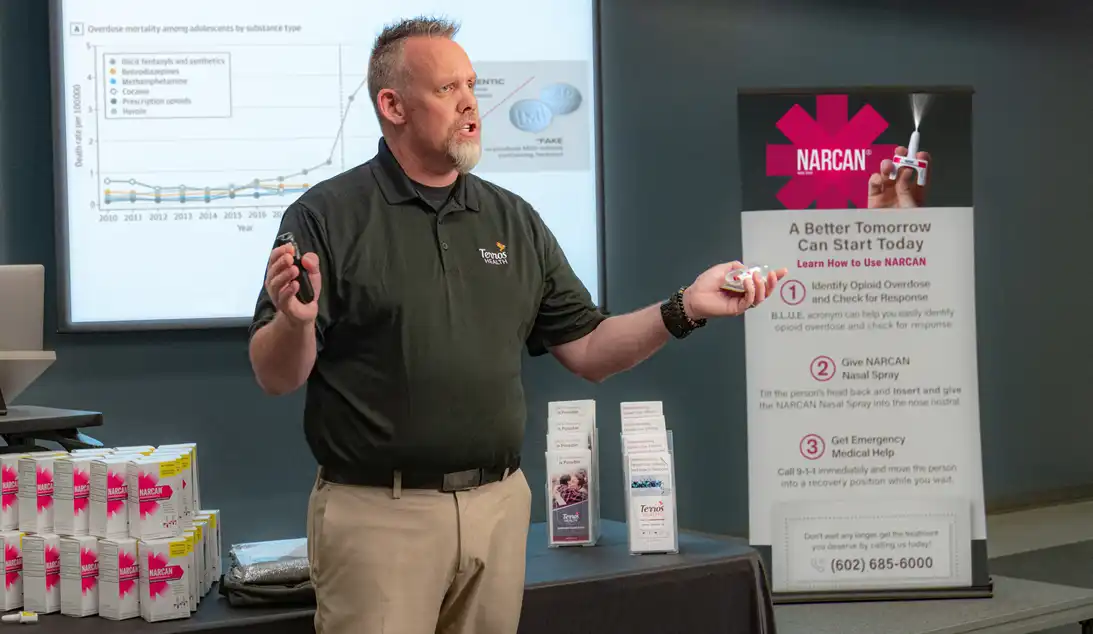
Led by an expert team, Terros Health’s innovative Narcan training program has been instrumental in helping Arizona reduce heroin, fentanyl and prescription opioid overdoses.
Each year, our expert team trains thousands of people from all walks of life in dispensing Narcan. Free Narcan samples are also available to members of the community via vending machines at our 27th Avenue Primary Care Center and HIV Center in Phoenix.
At the training, participants get an overview of the state of the opioid epidemic in Arizona, including the types of opioids available and their effects on the body and brain. Participants also hear about Narcan options and resources and learn how to dispense the medication. Upon request, Terros Health can issue a certificate of Narcan training completion.
Along with this program, Terros Health joined Mayo Clinic in an Arizona Department of Education initiative to reduce opioid overdoses among school-aged children. The program — School Training Overdose Preparedness and Intelligence Task Force (STOPIT) takes the state’s fentanyl crisis head-on by supplying Narcan and placing anti-drug awareness materials in all Arizona schools.
To learn more about Terros Health’s Narcan training program and request a free Narcan kit and training, call 602-216-7088.
Everyone has a story to tell, and sharing these stories can change the course for the storyteller and the individual hearing it.
Our peer support certification program enables those in recovery to translate their experiences into strength and hope while guiding others on their path to recovery. The certification enhances self and system awareness and can prepare participants for direct service positions in the behavioral health field. The peer support employment training is approved by Arizona Health Care Cost Containment System (AHCCCS).
Terros Health’s pre-job skills training program helps individuals identify their work preference and gain useful skills that benefit them in a work environment.
This includes culinary skills training to enhance awareness in nutrition, safe food handling, menu planning, food preparation and food service to prepare for potential jobs in the field.
Recovery isn’t just about a healthy body and mind. It’s also living a productive and independent life. We offer a host of rehabilitation, education and employment services, including skill-building, career exploration, job preparation and employment support to help patients live their best lives.
Basic education, Pre-GED, GED, basic computer skills and community education integrate them into the community and achieve self-sufficiency. Additionally, our comprehensive job development tools and search resources support individuals’ job-readiness.
Children, Adolescents and Families Empowered — Café — is more than a treatment center. It’s a vibrant, youth-focused community space that offers hope, healing, and connection.
Designed for adolescents between the ages of 12–17, the Café is a safe and inspiring environment where youth can receive:
- Evidence-Based Group Therapies
- Motivational Interviewing and Strength-Based Approaches
- Wraparound Support Services
At the Café, young people can also:
- Express themselves through art therapy and creative projects
- Learn life skills like cooking, laundry, and financial literacy
- Receive academic tutoring through our partnership with Grand Canyon University
- Practice communication and relationship-building skills
- Share meals and connect through board games and other engaging activities
Café programs are available at the following Health Centers:
- 27th Avenue Health Center in Phoenix
- Stapley Health Center in Mesa
Our partnership with Boys & Girls Clubs of the Valley
The Whole Child Approach Program is a first-of-its-kind partnership between Terros Health and Boys & Girls Clubs of the Valley to help fortify youths’ mind, body and spirit. Together, we bring health and wellness services into the Club setting, giving children and teens between the ages of 5 and 18 access to support for their emotional well-being, healthy habits and overall development. Families are also supported through this partnership, too, with resources and guidance to help them nurture their child’s success. This innovative partnership allows our Terros Health wellness coaches to be embedded within Clubs across the Valley, working alongside the Boys & Girls Club teams. Providing trusted health care in a safe, fun and supportive environment, the Whole Child Approach ensures every child and family has the tools and encouragement they need to thrive.
School-based counseling services
Terros Health’s school-based counseling services bring care and support directly to students on campus through partnerships with school districts across the Valley. By offering services where students learn, we provide a convenient option for families, reduce disruptions to the school day and ensure timely access to mental health support. Our clinicians work closely with teachers and on-campus social workers to create a collaborative approach that supports students’ academic, social and emotional success.
Arizona Families F.I.R.S.T
Reuniting families: That’s the goal of Arizona Families F.I.R.S.T., which stands for Arizona Families in Recovery Succeeding Together. Through this program, we offer a comprehensive array of services, including education, peer support and treatment for adults, youth and families challenged by substance use disorder and involved with the Arizona Department of Child Safety.
Patients receive varying levels of care, including intensive outpatient, standard outpatient and recovery maintenance during the day, in the evening and on weekends. Intensive case management is also available through the program’s recovery coaches and care coordinators. And prevention and education services are available to family members of referred participants who need support to strengthen and preserve families.
Through a partnership with the Arizona Department of Child Safety, Terros provides support to individuals between the ages of 18–21 who are transitioning out of the foster care system. This program offers young adults the opportunity to live in a small, furnished, apartment-style setting with access to supportive services that ease the transition to independent adulthood.
In addition to housing, participants receive assistance tailored to their personal goals, including education, vocational training, transportation, financial literacy, nutrition and access to healthcare resources. The goal is to empower young adults to achieve self-sufficiency.
FlexCare enables individuals to live in community-based settings while participating in clinical services that support stability, recovery, and independence. Through FlexCare, FlexCare Plus, and FlexCare Plus Extended, patients receive individualized support focused on building daily living skills, maintaining a safe and healthy home environment, and developing the essential abilities needed for long-term independent living.
By integrating clinical treatment with housing support and life skills development, FlexCare empowers individuals to work toward recovery and an improved quality of life in a structured, supportive setting. Through a combination of facility-based, site-based, and community-based services, FlexCare enhances each person’s ability to live self-sufficiently while accessing the care and resources necessary to support overall wellness.
Our Transitional Living Program offers short-term housing for while patients are recommended to participate in treatment and support services. During their stay, patients work closely with our team to develop the skills and resources needed to transition into permanent housing. The program offers a stable, supportive environment that fosters personal growth and prepares them for independent living.
The Community Living Program includes permanent housing integrated in the community and optional clinical services. Individuals can live in a shared house with roommates or in an apartment setting and can receive personal support services — at home or onsite — to enhance their independent living skills and promote greater community integration. The goal is to gain the skills necessary for long-term independence and successful community living.